







The first time you step onto an open deck for a glacier-viewing morning, you will understand why an Alaska cruise packing list looks different from one for the Caribbean. You may start the day in cool mist, see the sun break through at lunch, and need a warmer layer again while sailing past icebergs. The good news: you do not need to buy an expensive outdoor wardrobe to enjoy Alaska comfortably.
The smartest approach is packing flexible layers, practical shoes, and a few small items that make rainy ports and long sightseeing days easier. Your sailing month, itinerary, and planned excursions all matter, so think of this as a reliable starting point rather than a reason to fill an extra suitcase.
Alaska Cruise Packing List Essentials
Alaska cruise season generally runs from late spring through early fall. Even in July, temperatures can feel much cooler on deck or out on the water than they do in a sunny port town. A waterproof outer layer and clothes you can combine easily will serve you better than one heavy coat that takes up half your bag.
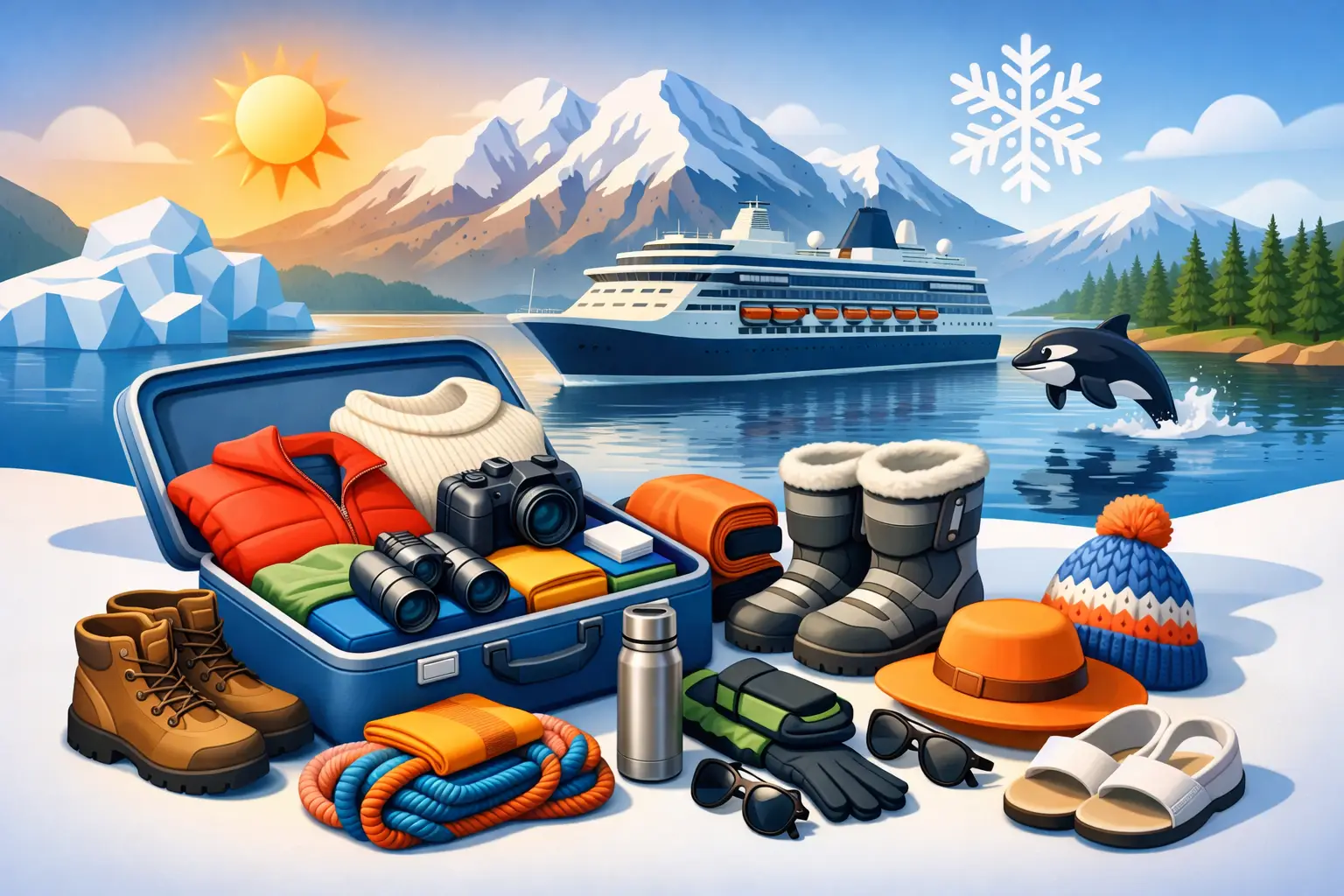
Start with these everyday essentials:
- A waterproof rain jacket with a hood, preferably roomy enough for a fleece or sweater underneath
- Two warm mid-layers, such as fleece pullovers, cardigans, or lightweight insulated jackets
- Long-sleeve shirts and comfortable T-shirts for easy layering
- Jeans, travel pants, leggings, or other comfortable long pants for port days
- Waterproof or water-resistant walking shoes with good traction
- Warm socks, plus a few extras in case a rainy day catches you by surprise
- A knit hat, gloves, and a scarf or neck gaiter for glacier viewing and early mornings
- Sunglasses, sunscreen, and lip balm, because sun reflecting off water and snow is stronger than many travelers expect
A compact umbrella can be useful in towns such as Juneau, Ketchikan, or Sitka, but it is not a substitute for a rain jacket. Wind can make umbrellas awkward on a ship deck, at a dock, or on a wildlife excursion. If you are choosing just one, bring the jacket.
The layer system that actually works
Think in three simple layers. Your base layer is a T-shirt, long-sleeve top, or moisture-wicking shirt. Your middle layer provides warmth, such as fleece or a sweater. Your outer layer blocks wind and rain. This system lets you adjust without heading back to your cabin every time the weather changes.
For May and September cruises, consider packing a lightweight thermal top and bottom, especially if you tend to get cold. For June through August, most guests are comfortable with regular long sleeves and fleece layers, although glacier days can still be chilly. You probably do not need snow boots or a bulky ski parka unless your shore excursion specifically calls for them.
Pack for Your Alaska Shore Excursions
Your excursions should shape a big part of your packing plan. A family taking a relaxed train ride has different needs than travelers heading out on a rainforest hike, salmon fishing trip, or helicopter glacier landing.
For hiking, wildlife viewing, and walking tours, prioritize closed-toe shoes with grip, a daypack, water bottle, rain jacket, and an extra warm layer. Trails can be damp and uneven even after a stretch of good weather. Comfortable shoes also matter in port, where it is easy to walk farther than planned while browsing shops or following the waterfront.
A glacier helicopter excursion may provide special gear such as boots, but always review the excursion instructions before you pack. Bring sunglasses and warm, flexible layers. Avoid assuming that a pair of regular sneakers will work for every adventure. If a tour requires specific footwear, renting or borrowing may be more affordable than buying gear you will only use once.
Whale watching and small-boat wildlife tours deserve extra planning. The boat ride can be windy and colder than the dock area, so wear your warmest layers, a hat that stays on, and water-resistant shoes. Keep your camera or phone protected in a small waterproof pouch or zip-top bag.
Families traveling with young children should pack one more layer than they think they need for each child. Kids who are happily looking for whales one minute may be cold and ready to go inside the next. A small backpack with snacks, dry socks, and a fleece can save a port day.
What to Wear on the Ship
Cruise ships are casual, comfortable places, and Alaska sailings are usually relaxed. Pack outfits you can wear more than once, especially pants, sweaters, and casual tops. Most guests are more concerned with staying warm on deck than showing up in a brand-new outfit every evening.
For dining rooms, resort-casual clothes are a safe choice. Think slacks, jeans in good condition, casual dresses, blouses, polos, or button-down shirts. Some cruise lines offer optional dressier evenings, and a simple dress, collared shirt, or nice blouse is usually enough if you would like to join in. There is no need to spend money on formalwear unless your cruise line and personal plans make it worthwhile.
Do bring a swimsuit. Heated pools, hot tubs, and indoor pool areas can be a welcome treat after a cool day ashore. Add flip-flops or sandals for the pool deck, plus a cover-up or casual shorts for moving between your cabin and the pool area.
Cabins can be compact, so avoid packing "just in case" outfits that do not mix with anything else. Choose a simple color palette and let each sweater, shirt, and pair of pants work with several pieces. That leaves space for souvenirs and helps you avoid checked-bag fees on flights.
Small Items That Make a Big Difference
A few practical extras are worth their space. Bring any medications in your carry-on, along with copies of prescriptions if needed. Motion sickness remedies are also helpful, even though Alaska's Inside Passage is often calmer than open-ocean routes. Everyone responds differently, and having a preferred option with you is easier than searching for one after you feel unwell.
A small crossbody bag or daypack is useful in every port. Include your cruise card, photo ID, phone, portable charger, tissues, hand sanitizer, and a refillable water bottle. Binoculars can be a wonderful addition for spotting whales, eagles, and distant glaciers from your balcony or the public decks. They are especially worthwhile if wildlife is high on your family's wish list.
Do not forget a charging setup. Many families now travel with multiple phones, watches, tablets, cameras, and e-readers. A non-surge-protected outlet extender may be permitted on some ships, but cruise line rules vary. Check your ship's policy before packing one, and never bring prohibited extension cords or appliances.
What You Can Leave at Home
Overpacking is one of the easiest ways to make an Alaska vacation more stressful. Leave behind bulky hair tools unless you truly use them every day, and skip excessive pairs of shoes. One dependable walking pair, one casual ship pair, and sandals or pool shoes are enough for most travelers.
You can also skip camouflage clothing for Alaska ports, as it may be restricted or discouraged on some cruise lines and in certain destinations. Drones are another item to reconsider. They are often prohibited on cruise ships, around wildlife, and on many excursions. A good phone camera, compact camera, or binoculars will be much more useful.
Laundry service is available on many ships, though prices and options vary. For a seven-night cruise, packing for roughly five or six days and rewearing outer layers is often a smart value choice. If you are adding a land tour before or after the cruise, plan for more casual clothes and room for a slightly larger day bag.
Before You Zip the Suitcase
Check the forecast for each port a few days before departure, but do not let one sunny prediction convince you to leave your rain gear behind. Alaska weather changes quickly, and the best packing plans prepare you for variety rather than perfection.
Keep travel documents, medications, valuables, a change of clothes, and your rain jacket in your carry-on. If checked luggage is delayed, you will still be ready to board, explore the ship, and start your vacation without worry.
A little thoughtful packing gives you more freedom to enjoy the reason you chose Alaska in the first place: family photos by the glacier, fresh air on deck, incredible wildlife, and the excitement of seeing a place unlike anywhere else. If you are still deciding which itinerary fits your dates and budget, a VL Voyages cruise expert can help make the planning just as stress-free as the sailing.