








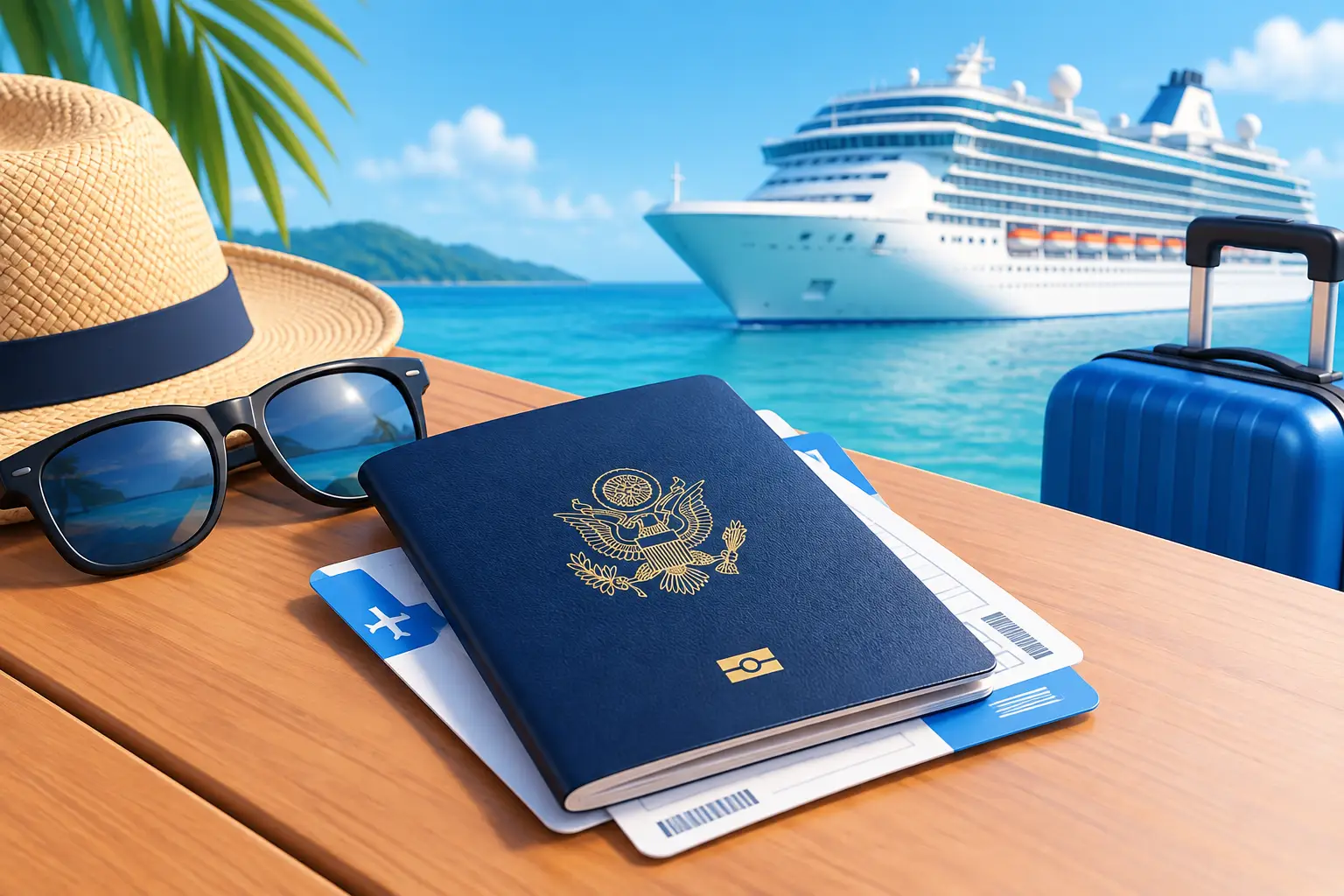
A missing document can turn a long-awaited sail-away day into a very expensive trip home. This cruise passport requirements guide helps U.S. travelers sort out what they truly need before packing swimsuits, formal-night outfits, and the kids’ favorite snacks. The short answer is that a passport is the smartest choice for nearly every cruise - but a few closed-loop sailings allow other documents.
Start with your cruise itinerary, not the ship
Passport rules depend on where your cruise begins, where it visits, and how you return to the United States. The first question is whether you are taking a closed-loop cruise. That means the ship departs from and returns to the same U.S. port, such as Miami to the Bahamas and Caribbean, then back to Miami.
For many closed-loop cruises, U.S. citizens may be permitted to sail with an original or certified copy of a government-issued birth certificate plus a government-issued photo ID, such as a driver’s license. Children under 16 usually do not need a photo ID when traveling with their birth certificate, though the cruise line can have its own rules.
That option can be helpful for a last-minute family getaway. Still, it is not the same as having a passport, and it does not work for every itinerary. A cruise that begins in one U.S. city and ends in another, visits certain destinations, or requires you to fly internationally is a different situation. In those cases, a passport book is generally required.
A simple rule saves a lot of stress: if you can get a passport book before sailing, bring one. It gives your family more flexibility if plans change and makes the port check-in process much easier.
Why a passport book is the best cruise document
A passport book is accepted for international air, land, and sea travel. That matters more than many first-time cruisers realize. Even on a closed-loop cruise where a birth certificate is allowed, an unexpected medical issue, missed ship departure, canceled sailing, or family emergency could mean flying home from another country.
You cannot fly internationally with a birth certificate and driver’s license. Without a passport, you could face delays, extra costs, and a trip to a U.S. embassy or consulate before you can get home. Nobody books a Caribbean cruise expecting that scenario, but having the right document is an easy form of vacation protection.
A passport also gives you more itinerary choices. It opens the door to one-way cruises, European sailings, Alaska cruises that call in Canada, and many worldwide destinations. If your family catches the cruising bug after a first Bahamas sailing, you will already be ready for the next great deal.
Check the expiration date early
Do not assume a passport is valid simply because it has not expired yet. Some countries require passports to remain valid for several months after your trip ends, often six months. Requirements differ by destination, and cruise lines may set documentation deadlines of their own.
Review every traveler’s passport as soon as you start comparing cruises. This includes children and infants, who need their own passport books for international travel. If a name has changed because of marriage, divorce, or another legal reason, make sure the passport name matches the name used on the cruise reservation and airline tickets.
Renewal and first-time passport processing can take time, especially before school breaks and holiday travel. Do not wait until final payment to check. A little early planning keeps a great cruise deal from becoming a paperwork scramble.
When a birth certificate may be enough
For eligible closed-loop cruises, a U.S. citizen can often use an original, certified copy, or certified electronic copy of a birth certificate along with valid photo identification if age 16 or older. The certificate should be issued by the state, county, or local vital records office. A hospital keepsake certificate is not accepted.
Some travelers may also qualify to use a certificate of naturalization, a consular report of birth abroad, or another approved proof of citizenship. Requirements can vary by cruise line and itinerary, so it is wise to verify the exact rule for your sailing before you make final plans.
A passport card may be accepted for certain land and sea crossings, but it is not valid for international air travel. For cruise travelers, that limitation is the reason a passport book remains the better all-around choice.
Enhanced driver’s licenses can also cause confusion. They are available only in some states and may be useful at certain land and sea borders. They are not a substitute for a passport book on most cruise vacations, especially where an international flight could become necessary.
Cruise passport requirements guide for families
Families have a few extra details to manage, especially when grandparents, friends, or one parent is traveling with children. Start by making sure each guest’s reservation name matches the name on their travel documents exactly. Small differences, such as a missing middle name, are often manageable, but it is much better to resolve questions before embarkation morning.
If a child is sailing with only one parent, a grandparent, or another adult, carry a notarized letter of permission from the non-traveling parent or legal guardian whenever possible. The letter should include the child’s name, travel dates, ship or itinerary details, and contact information for the parent granting permission. Some destinations, cruise lines, or border officials may ask for it.
For blended families, guardians, and adults traveling with a child who has a different last name, it can also help to bring supporting documents, such as a birth certificate, custody paperwork, or adoption records. You may never be asked for them, but having them in hand is far easier than trying to locate them from a cruise terminal.
Keep documents with you, not in checked luggage. Put passports, birth certificates, photo IDs, visas if required, travel insurance details, and emergency contacts in a secure carry-on bag. Take clear copies or photos for your records, but remember that a phone photo does not replace the original document at check-in.
Destinations that can add requirements
The Caribbean is popular because many itineraries are simple for U.S. travelers, but “Caribbean cruise” is not one single documentation rule. Ports, entry policies, and visa requirements can differ based on citizenship and itinerary. The same is true for Alaska, Mexico, Canada, Europe, Asia, and South America.
Alaska cruises are a common example. Many sailings stop in Canada, and some begin or end in Vancouver. A passport book is the practical choice, and travelers with certain immigration histories or prior legal issues should review Canadian entry rules well before booking. Do not assume a short port call makes entry requirements disappear.
European cruises typically require a passport book, and some itineraries may involve visas or additional entry authorizations depending on nationality and countries visited. If you are not a U.S. citizen, your requirements may be different even when sailing from a U.S. port. Use the passport and residency status of each individual traveler when checking the rules.
Avoid the most common boarding-day mistakes
The biggest mistake is relying on general advice from a friend, social media post, or an old cruise confirmation. Rules can change, and the documents that worked for someone else may not work for your exact ship, sailing date, and citizenship.
The second mistake is booking flights before confirming documentation. If your cruise leaves from San Juan, Vancouver, or a European city, flying to the departure port creates international travel requirements even before you step onboard.
Finally, do not pack documents in a bag you plan to hand over to porters. You will need your identification and cruise paperwork to enter the terminal and complete check-in. Keep them accessible, protected from water, and with the adult responsible for the travel party.
Get expert help before you place a deposit
Cruise documents should never be an afterthought, especially when a family is coordinating school calendars, flights, cabins, and a vacation budget. Before booking, confirm the departure and return ports, every country on the itinerary, and each guest’s citizenship and document status.
A cruise expert can help you catch those details while comparing ships and prices, so you can focus on the fun part - choosing the pool deck, shore days, and dinner plans. At VL Voyages, friendly guidance has been part of stress-free cruise planning since 1995, with personal help from the first quote through sailing day.
Set a reminder today to check every passport in your household. Once those documents are handled, you can count down to your getaway knowing the whole family is ready to board with confidence.