








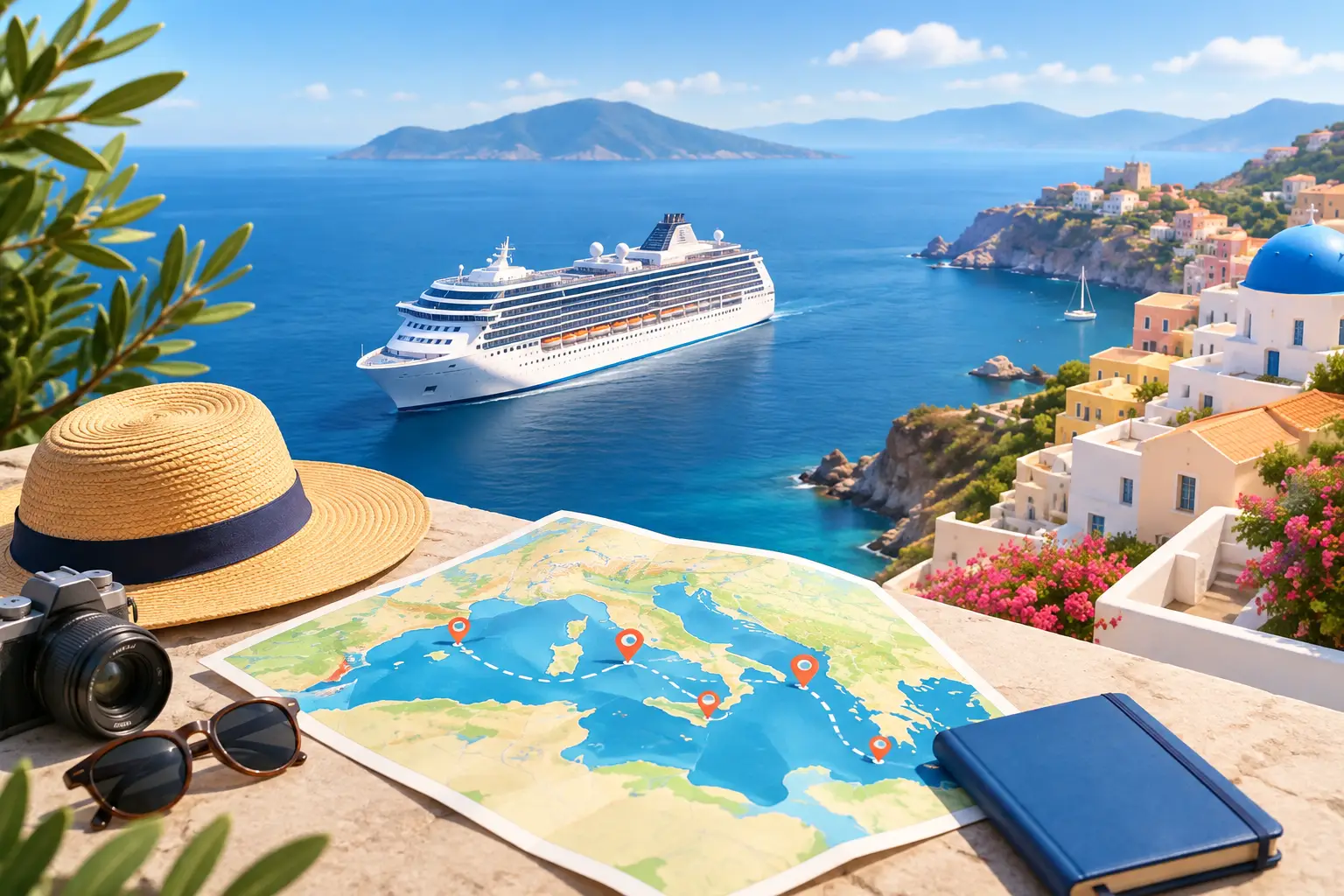
You can eat breakfast beside Rome’s ancient port, watch the sunset over Santorini, and wake up near Barcelona without packing and unpacking every other day. That is the real appeal of a Mediterranean cruise, but choosing the right route makes all the difference. This Mediterranean cruise itinerary guide helps families, couples, and first-time European cruisers sort through the ports, sailing lengths, and seasons so their vacation feels exciting instead of rushed.
Start With the Mediterranean Region That Fits You
The Mediterranean is not one simple destination. Cruise lines generally divide it into Western Mediterranean, Eastern Mediterranean, and Greek Isles itineraries. Some longer sailings combine regions, but they can add many sea days or involve flights between embarkation and disembarkation cities.
For travelers who want famous cities, food, art, and an easy first European cruise, the Western Mediterranean is often the best starting point. These routes commonly sail from Barcelona, Rome, or sometimes Marseille, with stops such as Florence/Pisa, Naples, Cannes, Palma de Mallorca, and Sicily. Families often like the mix because there is plenty to see, yet ports can offer kid-friendly choices like pizza-making, beach time, aquarium visits, and scenic train rides.
The Eastern Mediterranean is a great match for travelers drawn to ancient history and dramatic coastlines. Depending on the itinerary, you may visit Athens, Istanbul, Dubrovnik, Kotor, Ephesus, or Crete. These sailings can feel more port-intensive, which is wonderful for curious travelers but may be tiring for young children or anyone hoping for plenty of pool time.
Greek Isles cruises usually focus on the postcard moments people imagine first: whitewashed villages, blue domes, clear water, and seaside tavernas. Santorini and Mykonos are popular highlights, while smaller islands such as Rhodes, Corfu, or Milos can provide a more relaxed pace. Keep in mind that Santorini is often a tender port, meaning the ship anchors offshore and guests ride smaller boats to land. It is beautiful, but it can take extra time and may not suit travelers with limited mobility.
Choose a Sailing Length Before You Fall for a Port List
A seven-night cruise is the sweet spot for many US travelers. It gives you a meaningful taste of the Mediterranean while keeping airfare, hotel nights, and time away from work manageable. A typical seven-night route may include four or five ports, one sea day, and embarkation in a major city with good flight options.
If your budget and schedule allow, a 10- to 12-night cruise gives Europe more breathing room. This can be especially worthwhile for multigenerational groups or couples celebrating a milestone. Longer sailings may combine Italy, Greece, Croatia, and Turkey, or pair Spain and France with several Italian ports. You will usually get more variety, but also more walking, earlier mornings, and additional excursion costs.
For a first trip, avoid choosing an itinerary solely because it has the highest number of stops. A cruise that visits a new port every day can sound like a great deal, yet it may leave everyone worn out by day four. One or two sea days are valuable, especially for families. They give kids time to enjoy the ship, allow grandparents to rest, and make the vacation feel like a vacation.
A Smart First-Time Mediterranean Cruise Plan
For many travelers, the easiest approach is to fly in two or three days before the cruise, sail for seven nights, then spend one extra night in the disembarkation city if flights and budget permit. Arriving early protects you from flight delays and gives you time to enjoy the city instead of racing from the airport to the pier.
Barcelona works well for an easy pre-cruise stay, with a major airport and a port close to the city. Rome is unforgettable, but the cruise port is actually in Civitavecchia, about 75 to 90 minutes away depending on transportation. Athens cruises often depart from Piraeus, while Venice-area itineraries may use Ravenna or Trieste rather than the historic city center. These details matter when comparing what looks like similar deals.
Compare Ports by What You Can Realistically Do
A port name can be misleading. “Florence/Pisa” sounds like one stop, but Florence is usually about 90 minutes from the port of Livorno each way. Rome from Civitavecchia also requires significant travel time. If seeing the Colosseum or the David is a lifelong dream, the effort is worth it. If your group includes toddlers, seniors, or people who prefer a slower day, choose a nearby coastal town, a winery, or a beach instead.
Naples is one of the Mediterranean’s most flexible ports. You might tour Pompeii, visit Capri, explore the Amalfi Coast, or simply enjoy authentic pizza in town. The right option depends on your energy level. Amalfi Coast drives are scenic but winding, while Pompeii requires walking on uneven ancient streets.
In Athens, the Acropolis is a must-see for many visitors, but it involves uphill walking and can be very hot in summer. A guided tour with transportation can make the day easier. In Dubrovnik, walking the city walls offers stunning views, but it is not the best choice at midday in July or August. A shaded old-town stroll, cable car ride, or short boat trip may suit your group better.
This is where personal cruise planning is especially helpful. A trusted cruise expert can look beyond the glossy itinerary and help you compare arrival times, tender ports, transportation needs, and the true pace of each day.
The Best Time to Cruise the Mediterranean
The Mediterranean cruise season generally runs from April through October, with some lines offering limited winter sailings. There is no single best month because weather, crowds, school schedules, and prices all pull in different directions.
April, May, late September, and October are often excellent value months. Temperatures are usually comfortable for sightseeing, popular sites may be less crowded than midsummer, and cruise fares can be lower than peak summer dates. The water may be cooler for swimming, particularly in spring, but many travelers happily trade hot beach weather for easier touring.
June through August brings long days, warm seas, and the easiest timing for families tied to school breaks. It also brings higher prices, heavier crowds, and very warm temperatures in cities such as Rome, Athens, and Naples. If summer is your only option, plan early-morning excursions, bring refillable water bottles, and build in a lighter port day.
For adults seeking lower fares and a more relaxed atmosphere, fall cruises can be a wonderful choice. Weather can be less predictable by late October, particularly in the Adriatic, so travel insurance and flexible expectations are wise.
Budget Beyond the Cruise Fare
A Mediterranean cruise can be an outstanding vacation value because your accommodations, meals, entertainment, and transportation between countries are included in the cruise fare. Still, Europe has expenses that can surprise first-time cruisers.
Airfare is usually the biggest extra cost, followed by hotels before or after the sailing, airport transfers, excursions, drinks, gratuities, and meals ashore. Some ports are close enough to explore independently, while others are easier with an organized tour because of distance or timing. The cheapest excursion is not always the best value if it leaves you worried about getting back to the ship.
When comparing cabins, think about how your family travels. An inside cabin may be the best deal for travelers who plan to spend every day ashore. A balcony can be a worthwhile splurge on a scenic Greek Isles or Adriatic itinerary, especially for couples who enjoy quiet mornings and sail-away views. For larger families, connecting cabins or a cabin near the kids’ club may matter more than a balcony.
Also compare what each cruise line includes. A lower base fare may not include beverage packages, specialty dining, Wi-Fi, or gratuities. A clear, item-by-item quote makes it easier to see the real vacation cost before you commit.
Pick the Right Ship, Not Just the Right Cities
The ship is your hotel, transportation, and backup plan if weather changes. A larger ship can be a strong choice for families because it may offer waterslides, kids’ clubs, theaters, casual dining, and plenty of activities on sea days. Smaller ships may reach more intimate ports and feel less crowded, but they can have fewer onboard options and a higher price point.
Couples may prefer an itinerary with longer port stays, later departures, or overnight calls in places such as Istanbul. Families may get more value from a ship with included dining choices and activities that keep everyone happy between port days. For groups, choosing a line with flexible dining and a range of cabin categories can make the trip much easier to coordinate.
A Mediterranean cruise should not feel like a race to check off countries. The best itinerary is the one that gives your group enough time to enjoy the places you visit, the ship you choose, and one another. With expert help from VL Voyages, you can compare great deals, find the route that fits your dates and budget, and start looking forward to Europe instead of sorting through booking tabs.